You get to program an adventure game using Python. You remember these games, right? Or maybe you read a Choose Your Own Adventure book? The game that you create will be driven by the player’s choices AND what they put in their inventory.
“You find yourself standing in an open meadow. There is a cabin in the meadow and a trail that leads into the forest. Press 1 to explore the cabin or press 2 to walk down the trail.”
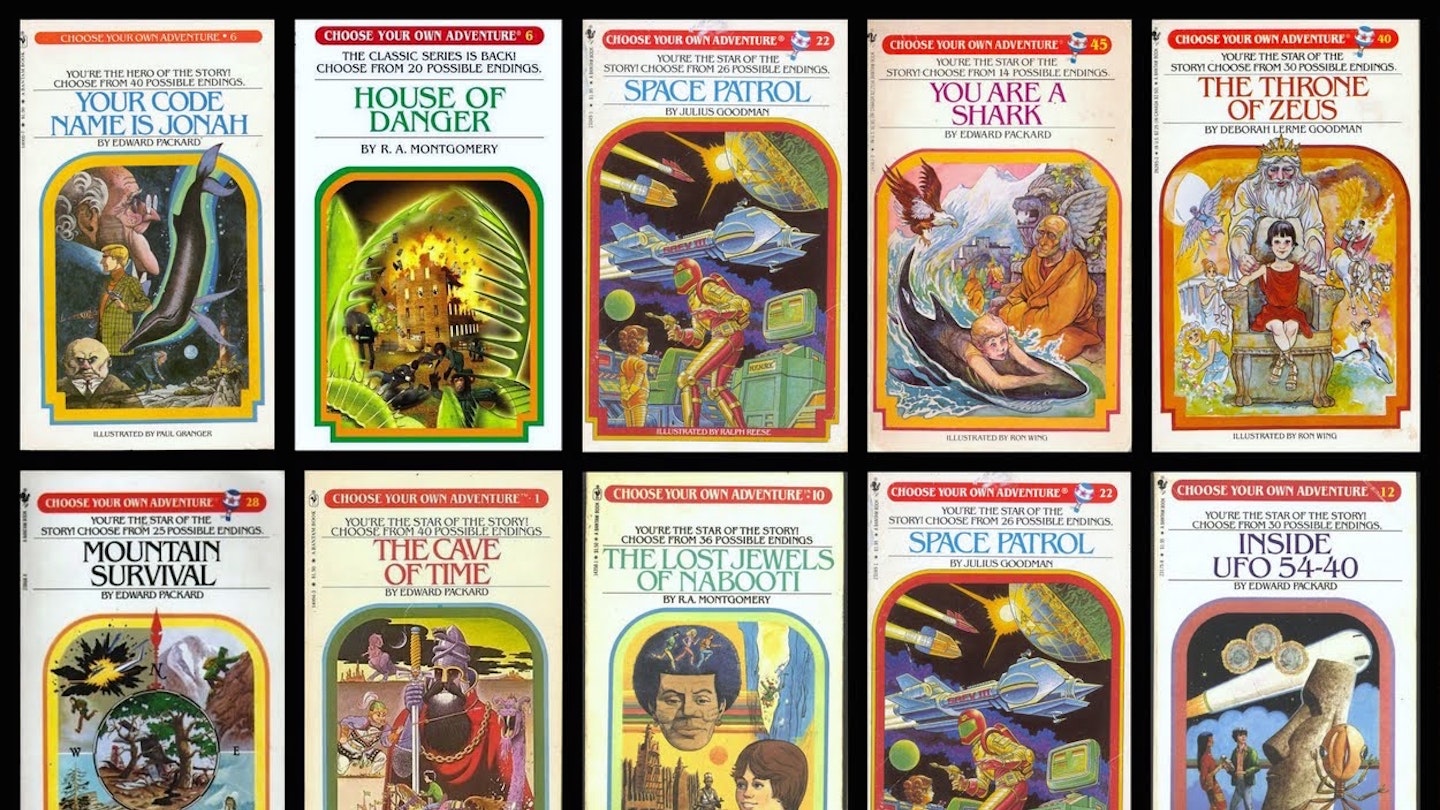
Take some time to play the first text based adventure game: Colossal Cave Adventure
And play Milstead’s sample adventure game (this version has helper code to show WHAT functions are being called)> This version is cleaner and doesn’t have all that helper code.
Your game should have the following features:
-have at least three different pathways or choices for the player –have at least two nested if/elif/else statements -use at least two different functions -each function may be called in more than one pathway depending player choices -ask your player if they want to play again – click here to learn how -use an inventory system (sample code and description below)
Part 1: plan your story and pathways Before you write even one line of code you need to choose the focus on the story of your adventure game. What will it be about? Are you thinking of a classic adventure game? Or maybe a day in the life of an Archie student? Take a look at the sample pathways linked below.
Each pathway will be chosen by the player. And each pathway will live in your program as an individual function.
Mark which parts of your outline are functions.
How do you turn this work in on Canvas? Choices:
a. type it up in a Google Doc and turn it in.
b. clearly DRAW the different pathways on a piece of paper and take a photo to turn in on Canvas.
c. make a digital flowchart using canva.com https://www.canva.com/design/play?type=TACQ-lCLuV8&category=tADWs8NJIhs&schema=web-2&uid=1787f506-24ed-4735-a42a-7e910730d48a&_branch_match_id=837554035142078845
Part 2: Programming
Include: 1. asking for the player’s name and use their name at least three times. 2. use import time to slow the game play down so they can read. 3. -have at least three different pathways or choices for the player –have at least two nested if/elif/else statements -use at least two different functions -each function may be called in more than one pathway depending player choices -ask your player if they want to play again – click here to learn how -make the story short and interesting
What NOT to do: Do copy/paste my sample and simply change the story. I want you to use it as reference and a guide but not a short cut to programming.
Whether you are SOLO or working with a PARTNER, your program should have these features:
- an inventory system that allows player to add or remove items. Click here for sample code.
- gameplay that is influenced by the inventory choices.
- limits to how many items they can can carry.
- at least four different endings (not all pathways can lead to the same outcome).
- asks for player name and uses it.
- functions throughout.
- a compelling story.
Partners should also include all of the above PLUS:
- some kind of points system – could be health, a score, damage points, experience points, customer satisfaction points. Click here for sample code.
- gameplay should be influenced by points – too low and game over, above a certain number and something good happens.
- at least six different endings.
What you do first: 1. fill out my exciting Google Form to tell me: -What your game is about? -Whether you are working solo or with a partner? 2. Then you get to make a PLAN for your game. Please mark which areas that will use a function. Choose one of these options to make and submit your plan : a. type it up in a Google Doc and turn it in. b. clearly DRAW the different pathways on a piece of paper c. make a digital flowchart using canva.com https://www.canva.com/design/play?type=TACQ-lCLuV8&category=tADWs8NJIhs&schema=web-2&uid=1787f506-24ed-4735-a42a-7e910730d48a&_branch_match_id=837554035142078845
Resources:
Milstead’s sample adventure game